
Running a small business is not easy. You have customers to serve, operations to manage, and a brand to build—all while working with a limited budget. The good news is that digital marketing gives small businesses a practical way to reach the right audience, build trust, and compete with larger brands.
You do not need to be everywhere online or spend a huge amount on advertising. What matters is choosing the right digital marketing strategies and using them consistently.
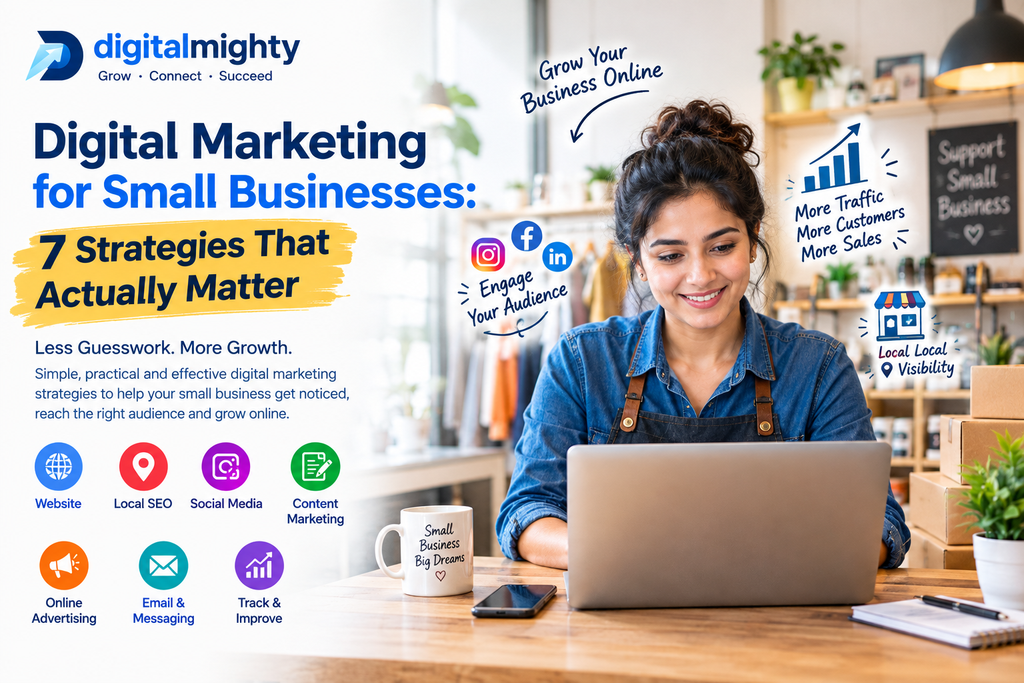
Here are 7 digital marketing strategies that actually matter for small businesses.
1. Build a Strong and Professional Website
Your website is often the first place potential customers go to learn about your business. A professional website should clearly explain what you offer, who you serve, and how customers can contact you.
Make sure your website is mobile-friendly, easy to navigate, fast-loading, and designed with clear calls to action such as Call Now, Get a Quote, Book a Service, or Contact Us.
A useful website does more than look professional—it helps turn visitors into customers.
2. Focus on Local SEO
For small businesses serving a specific city or area, local SEO can be extremely valuable. When people search for services near them, you want your business to appear where potential customers are looking.
Optimize your Google Business Profile, keep your business information accurate, collect genuine customer reviews, and create useful website content related to your local area.
For example, a business serving Varanasi can create content around relevant searches such as “digital marketing services in Varanasi” or “SEO agency in Varanasi.”
3. Use Social Media Consistently
Social media allows small businesses to connect directly with their audience. You do not need to publish content on every platform. Choose the platforms where your customers are most active.
Share helpful tips, behind-the-scenes content, customer experiences, educational posts, short videos, offers, and information about your services.
Consistency is more important than simply posting every day. Your content should give people a reason to follow and remember your brand.
4. Create Valuable Content
Content marketing helps businesses demonstrate their knowledge and answer customer questions before they make a purchase.
You can create blogs, videos, FAQs, guides, infographics, and social media posts based on the problems your customers regularly face.
Instead of only promoting your products or services, focus on providing useful information. Helpful content can build credibility and encourage potential customers to trust your business.
5. Invest in Targeted Online Advertising
Organic marketing takes time. Paid advertising can help small businesses reach specific audiences more quickly.
Platforms such as Google Ads and social media advertising allow businesses to target audiences based on factors such as location, interests, search behavior, and demographics.
Start with a realistic budget, test different advertisements, and monitor important metrics such as clicks, leads, conversions, and cost per lead. Avoid spending money without knowing what result you want from the campaign.
6. Build Customer Relationships Through Email and Messaging
Getting a new customer is important, but keeping existing customers connected with your business is equally valuable.
Email marketing and business messaging can help you share updates, useful content, offers, reminders, and personalized communication.
The goal should not be to send constant promotional messages. Instead, provide useful information and stay connected with customers in a way that feels relevant and helpful.
7. Track Your Results and Improve
One of the biggest advantages of digital marketing is that you can measure your results.
Track website traffic, search visibility, social media engagement, leads, conversions, advertising performance, and customer enquiries. These insights can help you understand what is working and where improvements are needed.
Digital marketing is not a one-time activity. It is a continuous process of testing, learning, improving, and growing.
Conclusion
Small businesses do not need complicated marketing strategies to build a strong online presence. A professional website, local SEO, consistent social media, valuable content, targeted advertising, customer communication, and regular performance tracking can create a solid digital foundation.
The key is to focus on the strategies that match your business goals and customers rather than trying to do everything at once.
With the right approach, digital marketing can help small businesses increase visibility, build trust, generate quality leads, and create sustainable online growth.
DigitalMighty helps businesses build practical digital marketing strategies that connect with the right audience and support long-term growth.